

BOOK REVIEW
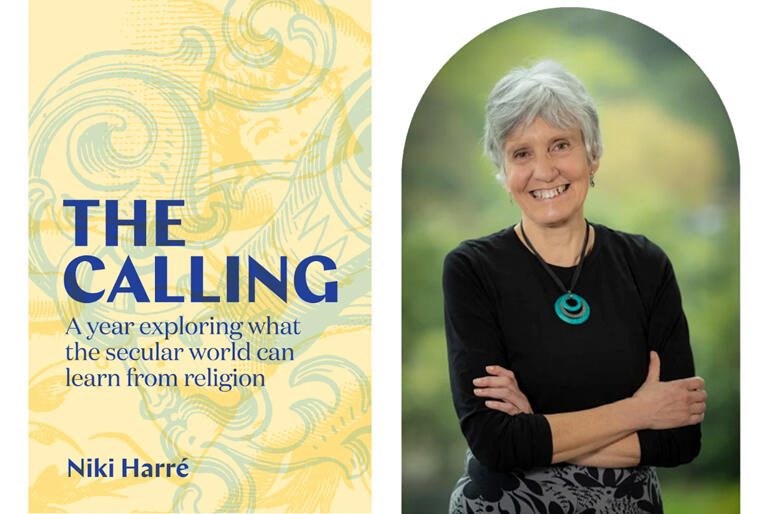
The Calling: A Year Exploring What the Secular World Can Learn from Religion
By Niki Harré, Auckland University Press, 2026.
Niki Harré, a psychology professor who doesn’t believe in God, spent a year acting as a ‘secular priest’ to see what non-religious people could learn from religion. She wondered if modern, secular life was missing something important, like rituals, deep reflection, or a sense of duty to others. So, she decided to try living like a priest, but without the religious beliefs.
During her year, she followed three ‘vows’: simplicity, hospitality, and pause. She attended church (Rhythms of Grace, a non-denominational community, gathering in Holy Trinity Cathedral in Auckland), read religious books, and talked to people of faith.
She also offered conversations and small ceremonies to her community, not as a religious leader, but as someone helping others connect with their values and each other. Along the way, she realized that religion teaches people to be humble, to listen, to accept what they don’t know, and to care for others. These aren’t just religious ideas, but they are human ones. She believed they could help secular society, too.
She noticed that religion often encourages people to slow down, to sit with difficult questions, and to focus on the well-being of the group, not just themselves. In contrast, she felt that secular life often rushes toward quick answers and individual success. Her experiment showed her that rituals, silence, and shared moments of reflection can create meaning and bring people together, even without mentioning God.
Her friends who didn’t believe in religion were sometimes confused or distant, but she found new connections with people who were open to her approach. She was positively surprised that exactly religious people, whom she suspected would be more suspicious and hostile to her idea of ‘secular priesthood’, were very supportive and friendly. While her year as a secular priest didn’t go exactly as planned, due to long Covid-19 lockdown in Auckland, it taught her that kindness, humility, and service are values everyone can practice, no matter what they believe.
Being personally involved in Niki’s research, as one of the interviewees, I observed her first-hand and felt deep appreciation for her openness and attempt to establish new links. As a person involved in inter-faith dialogue, she was perplexed and interested to explore in which way ‘my truth’ as a Christian, can exist, without threat or fear, in tension with respecting and accepting people of different religious traditions.
In the end, ‘The Calling’ is about what all can learn from religion: not just the beliefs, but the ways of living that bring us closer to each other and to what really matters. Isn’t that a wonderful area of potential dialogue with the secular world?








Comments
Log in or create a user account to comment.